How it all began
1. Tarot was born as a game, not a fortune-telling tool
The first decks appeared in northern Italy in the first half of the 15th century. They were for a card game: a separate series of trump cards with symbolic pictures was added to the ordinary suits. Italians called them carte da trionfi — “cards of triumphs”. Widespread use of the cards for divination came only three centuries later.
2. The word “tarot” is younger than the cards
The name tarocchi appeared in the early 16th century to tell the game apart from others that also had “triumphs” as trumps. Where the word itself comes from is still unknown — there are many theories and none is proven. The French tarot is a later form.
3. The oldest decks were painted for dukes
The best-known early cards are the Visconti-Sforza decks, made in the mid-15th century for the ruling family of Milan. They were hand-painted and decorated with gold leaf. None of them survives complete: the cards are scattered across museums and private collections, and the original Devil and Tower from the best-known set have never been found.
4. The oldest complete deck is the Sola Busca
The Sola Busca deck from the late 15th century is the earliest to survive with all 78 cards. Unlike other decks of its time, even its numbered suit cards show scenes. Today it is kept at the Pinacoteca di Brera in Milan.
5. People still play tarot as a game
The game never disappeared: in France jeu de tarot is popular and has its own tournaments, and in Austria and neighbouring countries people play variants of Tarock. In these games the cards are simply equipment, with no mysticism at all.
How tarot became mystical
6. The “Egyptian origin” was invented in the 18th century
In 1781 the French scholar Antoine Court de Gébelin claimed that tarot was the encoded “Book of Thoth” of ancient Egyptian priests. He had no evidence, but no one could disprove him either: Egyptian hieroglyphs were not deciphered until 1822. The legend proved stubborn and is still repeated today.
7. The first professional tarot reader was Etteilla
The Parisian Jean-Baptiste Alliette took the pseudonym Etteilla — his surname spelled backwards. In the 1780s he published a guide to divination with tarot and later created the first deck designed specifically for fortune-telling rather than play.
8. The Major Arcana were linked to Kabbalah and astrology
In the mid-19th century the French occultist Éliphas Lévi matched the 22 Major Arcana to the 22 letters of the Hebrew alphabet. Later that century London’s Hermetic Order of the Golden Dawn (1888) built a full system of correspondences: every card received a letter, a planet, a zodiac sign or an element. This system is the basis of our article on tarot cards for each zodiac sign.
The deck everyone knows
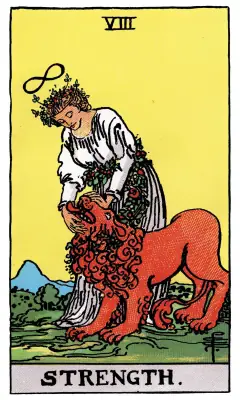
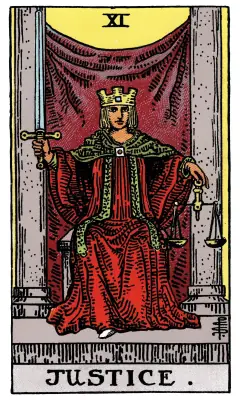
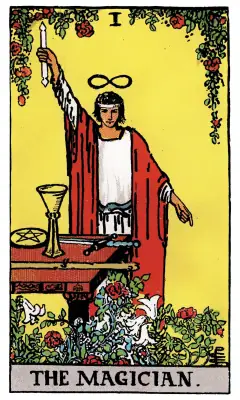
9. The Rider-Waite deck came out in 1909
It was conceived by Golden Dawn member Arthur Edward Waite, illustrated by the artist Pamela Colman Smith and published by William Rider & Son in London — hence the name. The following year Waite published The Pictorial Key to the Tarot, which among other things describes the Celtic Cross spread.
10. The deck’s artist barely earned from it
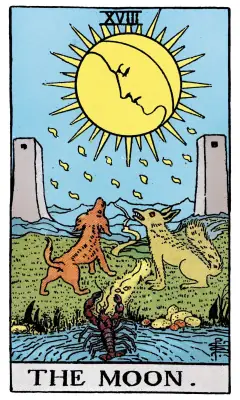
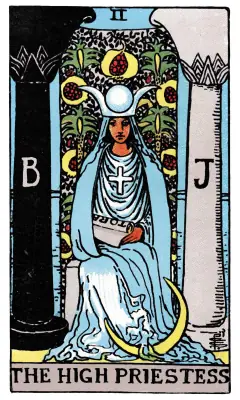
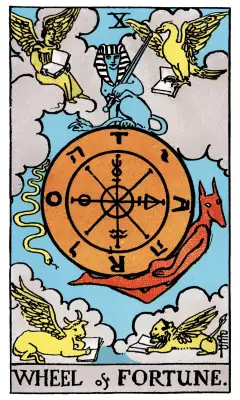
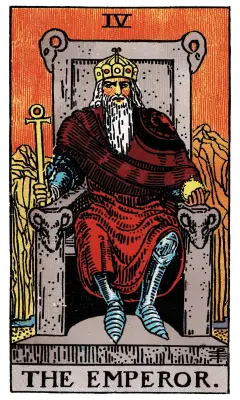
Pamela Colman Smith drew all 78 cards in about six months and received a one-off fee, with no share of sales. The deck became the most popular in the world, while the artist died in poverty in 1951. Today it is increasingly called the Rider-Waite-Smith deck to give her due credit.
11. It was the first mass-market deck with every card illustrated
Before Smith, numbered suit cards usually looked like playing cards: six cups were just six cups. She turned every card into a scene with people and a story — probably inspired by photographs of the Sola Busca deck. That is why this deck is the easiest to learn with: the meaning is visible in the picture.
12. Strength and Justice swapped places
In the older Marseille tradition Justice is number VIII and Strength is XI. Waite swapped them so that the order would match the Golden Dawn’s astrological system: Strength is linked to Leo and Justice to Libra, which comes later in the zodiac. That is why these cards carry different numbers in different decks.
Tarot in culture
13. The Joker is not descended from the Fool
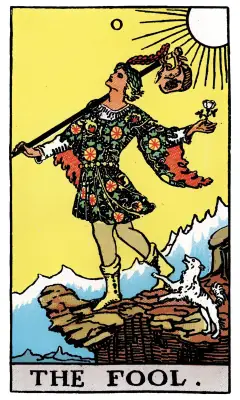
The popular idea that the Joker in playing cards comes from tarot’s Fool is a myth. The Joker appeared in the United States in the 1860s for the game of euchre. In the game of tarot the Fool works as an “excuse” — it lets you avoid following suit — so in the French game it is literally called l’Excuse.
14. Salvador Dalí painted his own deck
In the early 1970s Dalí was invited to create tarot cards for the James Bond film Live and Let Die (1973). The film ended up using a deck by another artist, Fergus Hall, but Dalí finished the work anyway — his Universal Tarot was published in 1984.
15. Some decks had 97 cards
The Florentine game of minchiate (16th century) used 97 cards: 40 trumps were added to the usual suits, including the twelve zodiac signs, the four elements and the virtues. So 78 cards is just the most common tarot format, not the only one.
What it means for us
Tarot is not an ancient secret book but a living symbolic language that artists, philosophers and mystics have added to for centuries. That is what makes it rewarding: every card blends medieval imagery, astrology, psychology and the personal experience of whoever is reading it.
Want to get to know the cards better? Start with our tarot card meanings library or a simple Past, Present, Future spread.