
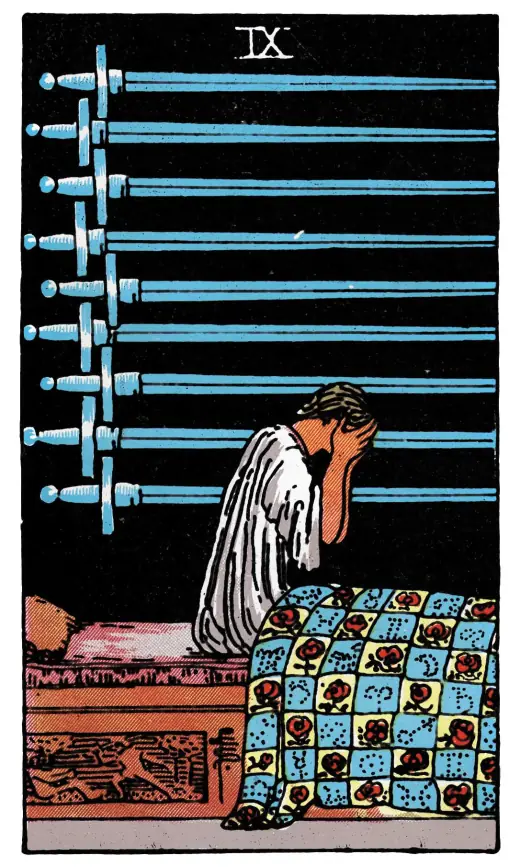
Nine of Swords — tarot card meaning
The Nine of Swords is the card of anxiety, sleepless nights and worry — fears magnified by the mind that are rarely as large in daylight.
Upright
Reversed
Upright meaning
The Nine of Swords is the card of anxiety, guilt and the sleepless night. As the ninth card in the suit of Swords — the suit of air, intellect and truth — it shows what happens when the mind turns its sharpness against itself. Worry loops replay, worst-case scenarios multiply, and the darkness of three in the morning makes every problem look unsolvable.
When this card appears upright, it points to mental anguish rather than external catastrophe. The swords in the image hang on the wall; none of them touch the grieving figure. This is the card's central teaching: the suffering is real, but it is largely produced and amplified by thought. Fear, regret over the past or dread of the future has grown out of proportion to the actual situation.
The Nine of Swords asks you to bring your fears into daylight. Name them, write them down, say them aloud to someone you trust. Anxiety thrives in isolation and silence, and it shrinks under honest examination. The card is painful, but it is also a signal that relief begins the moment you stop carrying the worry alone.
Reversed meaning
Reversed, the Nine of Swords often marks the beginning of recovery: the nightmare is ending, you are learning to release worry, and hope is returning after a dark period. Fears that seemed overwhelming are being faced and found smaller than imagined. Alternatively, the reversal can show anxiety turned fully inward — hidden despair, worries you refuse to speak about, or self-torment over something others have long forgiven. In either reading, the message is the same: secrecy feeds the fear. Talk to someone, seek support if you need it, and let the light in.
In love & relationships
In love, the Nine of Swords points to anxiety about the relationship rather than a real breakdown: fear of betrayal, guilt over past mistakes, or sleepless replaying of an argument. Often the worry is far larger than the facts justify. If you are single, old wounds may be convincing you that new love will end the same way. The remedy is honest conversation — voice the fear to your partner or to yourself on paper, and check it against reality before acting on it.
In career & money
At work, the Nine of Swords describes stress, burnout and dread: lying awake over deadlines, fearing dismissal, or agonizing over a mistake. The card suggests the pressure is being magnified by your own mind — colleagues likely see the situation as far less dire. In money matters it can show anxiety about debt or security that paralyzes rather than motivates. Break the loop with concrete steps: list the actual obligations, ask for help or an extension, and separate real risks from imagined ones.
Symbolism
In Pamela Colman Smith's illustration, a figure sits upright in bed, face buried in their hands, woken by grief or nightmare in the dead of night. Nine swords hang horizontally on the black wall behind — present and oppressive, yet touching no one, showing that the torment is mental, not physical. The quilt is embroidered with red roses and the signs of the zodiac, symbols of passion and the ordinary cycles of life that continue beneath the suffering. Carved into the bed's base is a scene of one figure defeating another — the inner struggle made visible. The surrounding darkness is the night of the mind that dawn will disperse.
Self-reflection prompt
The Nine of Swords invites a searching question: which of my fears are facts, and which are stories my mind tells at 3 a.m.? Try journaling each worry in one column and the evidence for it in another — most anxieties shrink dramatically on paper. Ask yourself what guilt you are still carrying that no one else is holding against you, and what would change if you spoke your worst fear aloud to someone you trust. This card teaches that naming the fear is the first step out of the dark.