
Death — tarot card meaning
Death, Major Arcana card 13, signifies transformation, endings, and rebirth — the close of one chapter so a new one can begin. It rarely means literal death.
Upright
Reversed
Upright meaning
Death is the thirteenth card of the Major Arcana, and despite its stark name it is one of the most misunderstood cards in the tarot. In the Rider-Waite-Smith tradition it almost never predicts physical death. Instead, it marks a profound and often unavoidable transformation: the definitive end of a phase, identity, relationship, or way of living that has run its course.
When Death appears upright, something in your life is concluding — and the card asks you to let it. Resisting this ending only prolongs discomfort; accepting it clears the ground for genuine renewal. The change Death brings is structural rather than cosmetic. It strips away what is no longer viable so that what remains is essential and true.
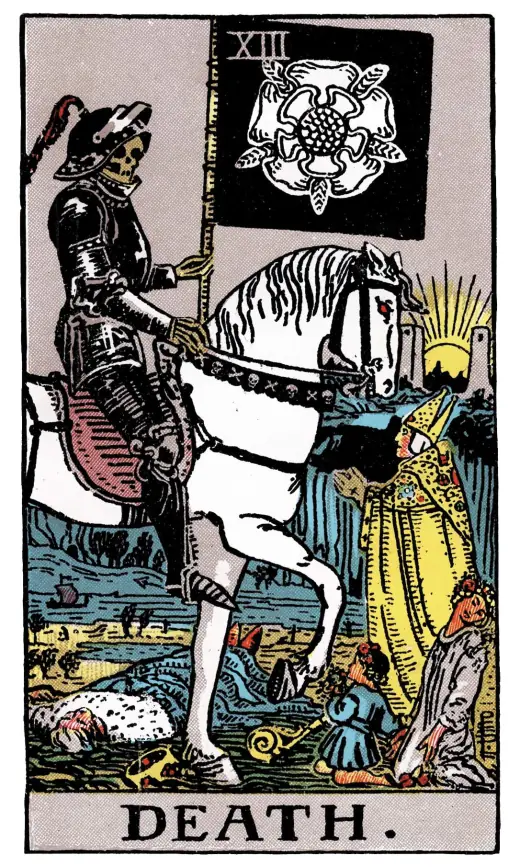
In a reading, Death often follows a period of holding on too long. It can feel abrupt or even ruthless, but its ultimate message is hopeful: every ending in this card carries the seed of rebirth. The sun still rises on the horizon of the RWS illustration. What dies here makes room for a stronger, more honest version of your life to grow.
Reversed meaning
Reversed, Death points to resistance against a necessary ending. You may be clinging to a job, relationship, habit, or self-image that has already died in everything but name, and the refusal to release it is creating stagnation. The transformation is still coming — reversal delays it, it does not cancel it. This position can also describe inner change happening privately: old beliefs quietly dissolving before any outer shift is visible. The card advises examining what you fear about letting go. Often the anticipated loss is far more painful in imagination than the release itself turns out to be.
In love & relationships
In love, Death signals a relationship entering a decisive transformation. For couples, an old dynamic must end — familiar patterns of relating are dissolving, and the partnership either renews itself on honest terms or concludes. If a relationship has been ending in slow motion, this card confirms the closure. For single people, Death asks you to release attachment to a past partner or an outdated idea of what love should look like. Genuine new connection becomes possible only after that release is complete.
In career & money
In career and money questions, Death marks the end of a professional chapter: a job concluding, a role being restructured, a business model becoming obsolete, or a career identity you have outgrown. Fighting the change wastes energy that adaptation would use better. Financially, the card can indicate cutting losses — closing an unprofitable venture, ending a draining financial arrangement, or overhauling how you handle money. What follows the ending tends to be leaner, clearer, and better aligned with who you are becoming.
Symbolism
The Rider-Waite-Smith card shows a skeleton in black armour riding a white horse — death as an unstoppable force, the horse's whiteness signalling purity and the impartial nature of change. He carries a black banner bearing a white five-petalled rose, an emblem of life and beauty persisting through endings. A king lies dead beneath the horse, while a bishop, a woman, and a child face the rider: death levels every rank and age. In the background, the sun rises (or sets) between two towers — the same towers seen in The Moon — promising that renewal follows every ending. A boat crosses the river, echoing the soul's passage.
Self-reflection prompt
Death invites a searching question: what in my life has already ended, even though I keep behaving as if it hasn't? Journal about the roles, relationships, and self-definitions you maintain out of habit or fear rather than genuine vitality. What would you have to feel if you admitted something was over? Consider also what wants to be born in you — transformation has two halves, and naming the emerging self is as important as honouring what you are releasing.